Shaking up Harvard
By David Abel | Globe Staff | 1/12/2002
Some recall a Socratic dialogue with him playing the devil's advocate; others remember him acting as a bully, holding firm to his views and scoffing at others' ideas.
At a law school dinner just a few weeks after Lawrence H. Summers took over as president of Harvard, he provoked a heated debate about age discrimination policy - arguing that it was fair to use age as a factor in awarding tenure and astonishing professors who hosted a friendly meeting to introduce him to some of the university's legal scholars.
"He seemed to regard that the way to get to know the faculty was to have an abstract debate, as opposed to just asking questions about the law school or politely inquiring about our research," one professor at the meeting said.
Summers, who recalls hoping to draw professors that night into a "vigorous intellectual conversation," arrived at Harvard with a reputation for being abrasive - and many on campus believe he has lived up to his reputation. Six months into a presidency that he promised would shake up the nation's premier university, Summers has had to temper his practice of playing intellectual provocateur and learn a new role: diplomat.
"I think it is important to avoid misunderstandings and to clear them up rapidly when they arise," said Summers in a phone interview. "I think one is reminded that it is always best to advance from areas of mutual interest."
In the past few weeks, Summers has come under pressure from both above and below for his blunt talk. Members of the Harvard Corporation, the university's governing board, admonished him for angering senior black scholars and for allowing a private meeting with the popular professor Cornel West to simmer into a public feud over how strongly the president supports diversity, university officials say.
While many at Harvard praise the new president's assertive, blunt style, he irked some on campus when he spoke out about patriotism and supporting the nation's military in wartime. He led some professors who study Latino issues to consider leaving after he rebuffed two proposals to create the campus's first center for Latino studies. Others recoiled at a lecture in the law school this fall when he called a question from a female law professor "stupid."
However, Summers has moved quickly to defuse campus controversies when they have gone public. He called the professor from the law school to apologize; he made a statement in support of diversity to appease concerned black and Latino professors; and he met with West last week to heal wounds from their previous meeting.
The president declined to discuss private conversations with professors and when asked why he has developed a reputation for harshness, he said, "I'm not going to speculate on others' judgments."
It has never been easy to be president of Harvard, a decentralized institution where much of the power rests with deans at the university's 10 schools. "It is no great surprise that assertive, envelope-stretching Harvard presidents run into faculty flak," said Morton Keller, a coauthor of the recently published "Making Harvard Modern."
He compared Summers's short term with the tensions that arose when, in the late 19th century, president Charles W. Elliot loosened up a rigid curriculum by allowing electives, or when James Bryant Conant in the 1930s transformed the admissions process into more of a merit system, and when Derek Bok two decades ago pressed the university to open more to minorities and women.
Unlike Summers's job in Washington, where he served as the Clinton administration's treasury secretary, Harvard's president can't simply fire dissident subordinates; he has to find common ground with the university's renowned academics, many of whom have large egos, differing interests, and lifetime appointments. He must also contend with students, a group of whom occupied the president's office last spring for nearly a month. The group plans protests this semester to pressure Summers to approve a "living wage" policy for the campus's lowest-paid workers. Last month, a committee established to end the sit-in concluded that Harvard's low-wage employees are earning less than a living wage.
"Every environment is different," Summers said, "but leadership is always about persuasion and the identification of mutual interest."
Fueling much of the tension on campus this fall has been the stark contrast in style between Summers and his predecessor, Neil L. Rudenstine, a low-key president who avoided personal conflicts and made a priority of building the university's Afro-American studies department.
"Neil had a soft approach," said Paul Grogan, Harvard's former vice president for public affairs, who left with Rudenstine in July. "He spent his entire life in the academy. He believed in academic collegiality and exercising leadership through quiet persuasion."
Summers has such a reputation for rubbing people the wrong way that it required help from friends including Robert E. Rubin, Summers's predecessor as treasury secretary, to persuade the university's presidential selection committee that his famously abrasive style was a part of the past.
But some professors and administrators insist he hasn't smoothed over his hard edge. "Rudenstine would say something is `complicated,' when he thought it was a bad idea," one senior administration official said. "Summers would say it is ‘outrageous and stupid,' when at first glance he thought, ‘This is a bad idea, but I'm willing to listen to a good argument.’”
While Rudenstine gently probed professors, the administrator said Summers asks questions and restates someone's position. "Then he smiles and refutes it," the official added. "It's this intellectual virtuoso performance that really makes people feel uncomfortable."
Some on campus may be put off by Summers's style, but others believe the new president's direct approach is what Harvard needs in an era of plenty, with many serious plans on the horizon. Summers has vowed to use the university's $18 billion endowment to revamp undergraduate education, hire hundreds of new professors, spread financial aid more evenly across the university's schools, bolster research in science and other disciplines, and oversee the growth of the campus in Allston.
"There are high expectations," said Jeremy Knowles, dean of the faculty of arts and sciences. "What we have now is a change to someone who's more analytical and more questioning. But it's good for our time. If he doesn't ask hard questions, we'll just go on doing what we've always done."
The difference in Summers's approach is visible every month when the president and the deans meet. While Rudenstine would allow "the conversation to bubble up," said Joseph S. Nye, dean of the Kennedy School of Government, Summers "states a position sharply to play devil's advocate."
"Larry is more like a colleague. You can engage in a real exchange of ideas," said Robert C. Clark, law school dean. "He's more like a professor than a politician. And that's good. This is an academic institution and you have to be able to mix it up with professors."
Many on campus, however, believe Summers could benefit from the politesse practiced by his predecessor.
After pressing Summers to take a public stand on affirmative action and threatening to leave for Princeton University, Henry Louis Gates Jr., the chairman of the Afro-American studies department, emphasized if there's one lesson the president should have learned in the last six months, it's the need for more tact.
"One of the most important things that the president must realize is how fragile and insecure the egos of even the most senior faculty are - and always to manifest a sense of noblesse oblige in his dealings," he said.
Recalling the law school dinner, Summers - who, according to The Wall Street Journal, has denied at least two professors tenure because of their age - said by arguing against age discrimination policies he was just hoping to draw them out.
"It's certainly my way to participate vigorously in the intellectual life of the university," he said.
David Abel can be reached at dabel@globe.com. Follow him on Twitter @davabel.
Copyright, The Boston Globe
A Professor Disappears
By David Abel and Ralph Ranalli | Globe Staff | 12/02/2001MEMPHIS - It was getting late and the well-dressed professor had switched from sipping port to ginger ale when he told a few of his colleagues how much he was looking forward to taking his wife and two young children to see where Elvis Presley lived.
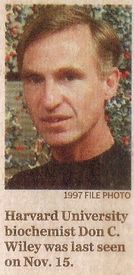
The group of eminent scientists had retired to the piano bar from a penthouse banquet hall in The Peabody, a century-old hotel. As midnight approached on Nov. 15, Harvard biochemist Don C. Wiley was preparing to drive back to his father's home about 20 minutes away.
"He was very upbeat," recalls Patricia Donahoe, the chief of pediatric surgical services at Massachusetts General Hospital and an old friend of Wiley's who chatted with him about 10:30 that night. "He was his normal, even-tempered self, and he was happy his family was coming in."
But Wiley, one of the nation's foremost experts on the way viruses such as HIV, influenza, and Ebola become deadly infectious diseases, never got to take his family to Graceland. He never even made it back to his father's.
Instead, the lanky 57-year-old professor vanished. At 4 a.m., police found Wiley's rental car abandoned on a mile-long bridge that spans the Mississippi River, with his rental-car contract in the glove compartment, the keys in the ignition, and a full tank of gas.
Two weeks later, police here say they have no clue what happened to him. Speculation abounds about the fate of the man colleagues say was doing work that could make him a candidate for a Nobel prize. But after more than a dozen Globe interviews with family, colleagues, and police, every theory seems to have serious flaws.
Since his car was parked in a traffic lane without any signs of a struggle and on a bridge where others have jumped, some investigators surmise Wiley killed himself. Yet family and friends insist the father of four and granddad of three is just not the type to commit suicide: He's exuberant about his work and was nearing a breakthrough in a molecular understanding of HIV that could help develop an AIDS vaccine.
While it's possible he was mugged or abducted, police and local criminologists say the downtown area around the Peabody is heavily patrolled and the safest part of Memphis. And both police and colleagues say Wiley has no scientific knowledge that would benefit bioterrorists, making it absurd to suggest he was kidnapped for his expertise.
"At this point, it could really be anything," says Lieutenant Richard True, a spokesman for the Memphis Police Department.
Wiley had come to Memphis on Wednesday Nov. 14 to attend a two-day annual meeting of the scientific advisory board of St. Jude Children's Research Hospital, on which he has served for about a decade.
He had flown in from Washington, where he went that Sunday to attend meetings for several days at the Howard Hughes Medical Institute in Chevy Chase, Md. The institute has long sponsored much of his research. At the Memphis airport, he rented a white 2001 Mitsubishi Gallant from Avis and drove for about 20 minutes to his 82-year-old father's ranch home in Raleigh, a quiet residential neighborhood in north Memphis.
It was late in the afternoon and the professor's father, William C. Wiley, says that his son seemed in good spirits. The two caught up for a while and the professor called his wife in Cambridge to let her know he had arrived and to find out what time he should meet her and their two children Lara, 7, and William, 10, at the airport that Friday.
Wiley's wife had already bought four tickets to visit Graceland. The couple's son, William, is a budding Elvis fan. The professor and the boy have a close relationship, and Wiley was eager to finally take him to Graceland.
"There was nothing out of the ordinary," says Wiley's wife, Katrin Valgeirsdottir, about their last conversation at 6:30 p.m. on Nov. 14. "We talked about where we were going for dinner on Friday night, and how I should talk to his dad about finding a nice place to eat. He sounded happy to see his dad."
Wiley left his father's house soon after for a dinner meeting at the Peabody Hotel with members of St. Jude's scientific advisory board, a group of high-profile scientists serving the nation's largest childhood cancer center. One board member, Leland Hartwell of Seattle, for example, was recently awarded the Nobel prize in Medicine. And Wiley, who colleagues say has a strong shot at the Nobel for his work using X-ray crystallography and complex mathematical formulas to diagram viruses, has received the prestigious Lasker and Japan awards.
The reserved professor greeted his colleagues that night with the same subdued but warm embrace they had come to expect from him. He inquired about the families of some and the progress of others' research. After finishing business for the night, Wiley and a few colleagues walked across the street to the Rendezvous, a rib joint that is perhaps Memphis' most famous barbeque restaurant.
"All I can really say is that he was definitely engaged," says Marvin Zelen, a board member who's a professor of statistical science at Harvard School of Public Health.
After dinner, Wiley returned to his father's home. The next morning he was up early and drove to the sprawling campus of St. Jude's to meet the board for a 7:30 breakfast.
His mission that morning was to review the hospital's structural biology department, which Wiley played a key role in founding. The professor toured the high-tech facilities and at times marveled to some of the department's 46 staff members that St. Jude's often received the latest scientific equipment before Harvard.
Later, in a formal review in front of the advisory board, Wiley delivered a report that praised the progress of the department's researchers in paring diseases down to their molecular level and making discoveries that might soon help treat a variety of infectious diseases.
"He asked a lot of technical questions and he was very thorough," recalls Larry J. Shapiro, a professor of pediatrics at the University of California at San Francisco Medical School and a board member who reviewed the structural biology department with Wiley. "I saw nothing at all to say he was disturbed, agitated, uneasy, or anything atypical."
When the board meeting wrapped up late in the afternoon, Wiley drove back to his dad's house. Around 5 p.m., the professor's father returned home from a few errands and found a note telling him his son was out for a 5-mile run and would be back soon.
When Wiley returned from the run, his youngest brother, Greg, who also lives in Memphis, popped in for a short visit. "We just shot the bull," says Greg Wiley, recalling the last time he saw his brother.
The professor showered, shaved, and just before 7 p.m. he zipped back to the Peabody Hotel for the banquet in honor of the visiting scientists. Wiley was wearing a black suit he had bought in 1999 when the emperor and prime minister of Japan awarded him their country's top science prize for his work showing how the immune system fights infections.
The formal gathering in the Peabody's penthouse included about 150 doctors, researchers, and administrators from St. Jude's. Several colleagues remember talking to Wiley that night about how he took his son sailing and his family's plans for the weekend.
"He was in great spirits," says Samuel L. Katz, a professor of pediatrics and infectious diseases at Duke University Medical Center who also serves on the hospital's advisory board.
Dinner ended about 10 p.m. and Wiley and several colleagues decided to hang around for a while in the hotel's lobby. After nursing a glass of port for about an hour, the professor switched to soda and told Patricia Donahoe and others about his plans to take his family to Graceland.
Although he had a room reserved for him at the hotel, Wiley told his remaining colleagues around midnight he was heading back to his father's house and he would see them the next day.
It was the last time anyone saw him.
The next four hours are a mystery.
About 3:45 a.m., the first calls started ringing at the police department. A white car pointing west in the direction of Arkansas was blocking a traffic lane on the narrow bridge. Patrol cars arrived a few minutes later and found the empty car.
Other than a missing hubcap on the right front wheel and yellow scrape marks on the Mitsubishi Gallant's front bumper, the car looked like it just came from the showroom. Police say they have no idea if the marks and missing hubcap were on the car before that Friday morning.
Harvard and St. Jude's announced a $10,000 reward this week for any information that helps find Wiley, and police say they have received a few tips since then. But investigators acknowledge they are no closer to finding him today than they were more than two weeks ago.
"The case remains a mystery," says Lieutenant Richard True. "He's still classified as a missing person. There's always hope."
David Abel can be reached at dabel@globe.com. Follow him on Twitter @davabel.
Copyright, The Boston Globe
Can-do Parents
By David Abel and Lynda Gorov | Globe Staff | 3/03/2001
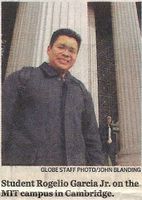
CAMBRIDGE - Every month, his hard-working parents send Rogelio Garcia Jr. about $200 in walking-around money.
It doesn't sound like much, but the 20-year-old junior at the Massachusetts Institute of Technology has an inherited knack for making a little bit stretch a long way.
The credit goes to his parents, Yolanda and Rogelio Garcia, who live in a cramped one-bedroom Los Angeles apartment and also support a daughter at the University of California and a son in high school.
Often starting after midnight and working 14 hours every day, rain or shine, Rogelio's father steers his old white truck through the back alleys of Los Angeles neighborhoods so he and his wife can gather thousands of cans.
"We're working 365 days a year," said Rogelio Sr., 53, a quiet, skinny native of Oaxaca, Mexico. "There's no rest."
For more than a decade, the couple has vied with other foragers to collect about 45,000 cans a month, earning them on average between $1,400 and $1,600.
Not a penny is wasted. What doesn't go toward food, gas, and rent goes to their 19-year-old daughter, Adriana, at UC Riverside, and to Rogelio Jr. at MIT.
Their son works just as hard as his parents.
In Cambridge - a city so far from home his parents thought they needed passports to visit - the bespectacled student stays up until 2 a.m. almost every day, amassing a different kind of wealth: studying aeronautical engineering and laying the foundation for a career that may soon allow his parents to retire."My parents always said, `Work hard, keep studying, and don't worry about the money,' " he said. "They always told me that I could do anything I wanted if I worked hard."
His parents grew up together in the same small town in Mexico. His father worked as a baker and made Oaxacan-style jewelry; his mother worked as a government secretary. The two later met and married in Los Angeles, after both took separate buses to the border and illegally dashed into the United States on foot.
They moved to an unincorporated section of Los Angeles called Venice, and both worked odd jobs. Rogelio found work as a restaurant dishwasher and meat cutter, earning as much as $9 an hour. Yolanda also worked various jobs, including one paying $7 an hour making pens at a factory.
Things went well until 1985, when Yolanda was laid off. That's when she got the idea to collect cans. Seven years later, also laid off from his job, Rogelio joined his wife's expeditions.
The work - arduous, demeaning, and sometimes risky - has never been ideal, and they must work hard to beat their competition to the quarry.
The first time Yolanda stuck her hand into a Dumpster she wasn't sure the money was worth the work. "I felt horrible," said Yolanda, 51, a small woman with callused hands and a bright smile that exposes her missing front teeth.
But the couple never lost sight of the goal. They didn't accept welfare, believing it would block Rogelio Jr., Adriana, and their 14-year-old son, Angel, from qualifying for financial aid. They also mistakenly believed that accepting public assistance would harm their chances for citizenship, which they eventually gained.
On one point, however, they didn't err. Their firstborn, Rogelio Jr., had a gift. From elementary school, it was clear he had a knack for math and science. The problem was making sure that their son didn't turn away from his talents and give in to the cruelty of his peers, who frequently teased him.
"He was always at the books, never in the streets, never running wild with friends," his father said.
On weekends, after finishing his homework, Rogelio Jr. would sometimes spend the day with his parents collecting cans. He would watch his father fetch a battered bicycle from his truck, which his mother would ride from one Dumpster to another. If at first he was embarrassed and kept his parents' occupation a secret from his friends, Rogelio learned to live with it.
"Kids could be very cruel, and the emotional stress was sometimes unbearable," he said. "But I got over it. I knew what my parents were doing, and why."
Though his parents pushed him, Rogelio needed little motivation. As a freshman in high school, he glimpsed his ticket out of poverty when a senior became the first student in his school to be accepted at MIT.
"It was really huge news that someone from Venice got into MIT," he recalled. "No one really knew where it was or what it was."
The odds of an impoverished Los Angeles Latino getting a coveted spot at the nation's top technical college improved when Rogelio Jr. aced his SATs. But even with high scores and a grade point average surpassing perfection - including advanced placement courses he had a 4.2 GPA - he doubted he would be accepted.
The competition was one obstacle; the price was another. The $33,000 annual tuition is more than twice his family's annual income.
Rogelio Jr. sent applications not only to MIT but also to Princeton, the California Institute of Technology, UCLA, UC Berkeley, and Carle ton College in Minnesota. In March of his senior year, he hadn't heard from any of them.
He was starting to despair when MIT called and accepted him. "I was like, `Who is this? Don't joke with me,' " he recalled.
MIT's generous package of grants, work-study, and low-interest loans didn't guarantee an easy life. Even with the $200 his parents sent him each month, he often lived on peanut-butter-and-jelly sandwiches and had to save enough money from his job working at an MIT lab to buy a winter coat.
The stress wasn't just about money. A child prodigy back home, at MIT Rogelio struggled to maintain a B average.
"My first year here was incredibly difficult," he said. "I didn't think I would make it."
Nearly three years later, lugging a large sack of books and wearing baggy blue jeans, black clunkers, and trendy, oval glasses, Rogelio is comfortable in Cambridge and indistinguishable from other college students.
The MIT upperclassman is over the hump. Though he still struggles with his humanities classes, he hopes to work soon for a company like Raytheon, where he can help build spacecraft equipment.
His parents will visit for the first time when he graduates in a year-and-a-half.
"I miss my family a lot," he said. "But I know they are very happy for me."
On a recent day in Venice, Yolanda Garcia was welcomed at a hotel where the Garcias are known and respected. An employee hauled out five large bags filled with trash. Meticulously, she sifted through each one, grabbing a bottle here, a can there.
The yield: perhaps a dozen bottles and cans. She wiped them clean, packed them in her own bags, piled them in her bike basket, and rode away.
After a few hours poking through Dumpsters, the small woman wearing three layers of sweatshirts and a red knit cap pulled low to protect her against the cold and the rain wasn't complaining. With her son at MIT, her daughter doing well, and her other son primed for success, she declared, "It's the American dream."
David Abel can be reached at dabel@globe.com. Follow him on Twitter @davabel.
Copyright, The Boston Globe

Follow-up story:
A LABOR OF LOVE IS REWARDED
By David Abel
Globe Staff
6/08/2002
CAMBRIDGE - The plane was leaving at 7 a.m., and because the car taking them to the airport wouldn't come until 5, they figured they had enough time to fit in a night shift. So, like every other night of the year, Rogelio and Yolanda Garcia piled into their old white truck and went to work collecting cans in the back alleys of Los Angeles.
When dawn broke, it would herald a day like no other in their lives, one they never envisioned before leaving their small town in Mexico more than two decades ago.
After four years of hearing about the domed buildings along the banks of a river in a cold and faraway city, they would see them for the first time. Their son, a child prodigy they pampered as best they could, though they had next to nothing, would become the family's first college graduate, and not just from any college, but from the Massachusetts Institute of Technology.
Yesterday, the Garcias, who gained national attention by collecting hundreds of thousands of cans over the years to help pay for their three children's education, watched as their oldest son, Rogelio Jr., graduated in style, pulling straight A's in his final semester and landing a lucrative job as an engineer.
"I never had any doubts he would do it," said his father, beaming despite the downpour and bitter wind that drenched the more than 2,000 graduates in ponchos and mortarboards yesterday on MIT's Killian Court. "We, of course, are very proud of him."
Other than a brief trip to Miami last year, courtesy of a TV station, yesterday was the couple's first day off in as long as they can remember - perhaps since 1985 when Yolanda began fishing through dumpsters.
Despite their joy at seeing Rogelio Jr. graduate after four years of pinching pennies, living off peanut butter and jelly sandwiches, and spending countless all-nighters cramming for classes that at first seemed impossibly demanding, the couple didn't have time to rest on their laurels. They had work to do.
Although their airfare and hotel bill was covered by alumni, the Garcias, who brought their two younger children, Angel, 15, and Adriana, a 20-year-old junior at the University of California at Riverside, were trying to make arrangements to return last night, a day ahead of schedule.
"Saturday is our best day," said Yolanda, a tiny 52-year-old whose smile glows brightly against dark cheeks tanned from so many years toiling under the California sun.
National publicity about their story has helped the Garcias financially over the past two years, but it has also hurt them, the couple says. That they could earn as much as $1,600 by collecting some 45,000 cans a month invited copycats - and the competition has significantly cut into their profits.
They also say they took a financial hit after Sept. 11. With fewer tourists visiting LA, fewer parties, and the hotels half-empty, they say the number of cans, bottles, and plastic redeemables fell.
So, in February, the city offered the couple a part-time job cleaning Venice Beach - near the cramped one-bedroom apartment they called home until moving recently to a larger place in what they describe as a "less noisy" part of the city.
The new job is good because it has allowed them to continue collecting cans - and to double their income to about $2,800 a month. The two continue cruising in their truck and collecting cans after midnight, but now, Monday through Friday, Yolanda leaves for the beach at 6 a.m. while her husband continues collecting cans. At 10 a.m., Rogelio, a slight, 5-foot-tall 54-year-old, takes over at the beach and his wife returns to collecting cans. At 2 p.m. on weekdays, the two meet up again and spend a few more hours working the alleys together.
"The good part is that the money is assured," Rogelio said. "But collecting cans is a job for life - we're our own bosses, there are no punch cards, and we can continue doing it as long as we like."
With Rogelio Jr. coming home to work for Raytheon, getting paid $60,000 a year - more than three times what his parents earn collecting cans - the ebullient 21-year-old, who yesterday completed a degree in aeronautical engineering, hopes his parents will let him do the family's heavy lifting. But with $25,000 in debt, his sister still in school, and his brother two years away from college, the couple insist they won't let up much.
"We might reduce our hours a little," said Yolanda, who bought a new dress for yesterday's commencement, "but working is a part of our lives. If we stopped, I'm afraid we would die."
Huddling in ponchos and sitting in the frigid rain from early morning until the afternoon, the Garcias weren't in the mood to complain. Nor were they bothered by about 100 protesters who came to show their anger at the day's keynote speaker, James D. Wolfensohn, president of the World Bank Group, who spoke about rising poverty throughout the world.
When their son found them among the throngs of parents at commencement, Yolanda and Rogelio looked at him with his new haircut and in his cap and gown, smiled, and then smothered him with hugs.
"This is really a great day," Yolanda said. "We couldn't be any more proud."
Anguish at MIT
By David Abel and Daryl Khan
Globe Correspondents
5/21/2000
LIVINGSTON, N.J. - Not long before MIT sophomore Elizabeth Shin set herself ablaze in her dormitory room April 10, classmates say, she had shown signs of distress, sometimes sobbing so loudly she kept other students awake.
The 19-year-old, known as much for her intellectual promise as her musical grace, was prescribed an antidepressant by the school's clinic and had been persuaded to start an outpatient mental therapy program.
But no one from the Massachusetts Institute of Technology called Elizabeth's family in New Jersey.
A month has passed and Cho Hyun and Kisuk Shin are still bristling with anger. The anguish of losing their firstborn has only increased as a result of what the Shins describe as a bureaucratic deafness to their appeal for information from MIT, police, and fire investigators.
"This extreme way," said Kisuk Shin, pausing to swallow, tears welling in her eyes. "It's just not Elizabeth. It's not her. It's not her at all . . ."
"It doesn't seem real to us," her husband said.
The couple want an autopsy report, conclusions from the police investigation, and a more satisfying explanation from MIT health officials about what caused the fire that left third-degree burns covering more than 65 percent of Elizabeth's body.
For MIT, the tragedy puts its officials on the defensive again - it is the university's third suicide this year and the fifth since 1998 - and forces them to confront difficult moral and legal issues involving students' rights of privacy as adults vs. parental rights to know about their children's well-being.
"The difficulty in this case is that [Elizabeth] clearly didn't want her parents involved - that was one of her specific concerns," said Robert Randolph, senior associate dean of students. "The question we have been reviewing is whether we should specifically counter the wishes of individuals."
Until the investigation is complete, the Shins say, they prefer to believe Elizabeth's attempts to kill herself were a cry for help gone terribly wrong, a self-inflicted injury that never received the proper medical attention. And while they spent the day before the fire with Elizabeth and saw nothing amiss, her parents say the signs were posted clearly enough for someone at MIT to have saved their daughter - or at least to have alerted them to intervene.
"Elizabeth could have been saved, and that's what makes us so angry," Kisuk said.
Cho Hyun added: "If parents are kept blind because of no communication between the school and parents, and the school's not doing a full-fledged job by taking care of students, then there's a chance of an instance like this repeating."
Because of confidentiality laws, MIT was not required to notify the Shins about Elizabeth's condition. But, in similar cases, according to Randolph, the school has notified parents. "The decision is made on a case-by-case basis," he said.
The housemaster of Elizabeth's dorm, Nina Davis-Millis, did call the family three weeks before the fire. She told them she had taken Elizabeth to the school's infirmary, the Shins said, but did not tell them it was because of self-inflicted cuts on her upper arm. Further, in the days before the fire, when Elizabeth could be heard screaming suicide threats in her dorm and was again taken to the infirmary, no one called the parents.
The Shins also never learned their daughter had agreed to start therapy. The treatment was set to begin the day after the fire.
"I have to confess that I have lost a huge amount of sleep over this, thinking about what I said and what I did," said Davis-Millis, who was a surrogate mother to Elizabeth as the adult supervisor of Random Hall's 93 students. "But, in the end, I feel I did everything I could."
Davis-Millis, who has worked as a librarian at MIT since 1985 and has been a housemaster for the past five years, knows well the rigors of MIT. Students, many of whom were at the top of their high school classes, have to learn to live with the stiffer competition and higher standards of one of the world's elite technical universities.
But she says she believes the best way for students to learn how to handle the pressure is for them to be treated as adults. If Elizabeth didn't want her parents to know that MIT doctors prescribed her the antidepressant Celexa, that was her choice, Davis-Millis said.
"Of course, there are risks and ethical dilemmas," she said. "But I admire our system. It treats students like the adults that they are."
Cho Hyun Shin disagrees.
"The age when they leave for school is 18 and up, but still they are not fully mature persons," he said. "They're still a child in a sense."
Elizabeth's death followed two other suicides this year: In March, Chris Milliard, a 24-year-old MIT graduate, leapt to his death from Phi Beta Epsilon fraternity house where he was living, and in February, Seth Karon, who had been on a leave of absence from MIT, committed suicide at his home in Plymouth, Minn.
School officials, however, assert that suicide is no more of a problem at MIT than at other campuses. Moreover, they say, the rate has declined significantly since peaks during the 1960s and 1970s. In the past 36 years, they say, there have been approximately 38 suicides, which would put MIT below the national average.
A survey by Katharyn Jeffries, an MIT junior who researched suicides for the campus newspaper, The Tech, found 21.2 suicides for every 100,000 undergraduate student years, a figure used to compare suicide rates among different populations. Her figures include students on leaves of absence. The national average among all people between the ages of 20 and 24, according to the National Institute of Mental Health, is about one-third lower than the undergrad figure, or 13.6 per 100,000.
Despite her many strengths, anyone who knew Elizabeth knew she was in a funk, including her parents. Only a month before the fire, she and her boyfriend of the past several months had broken up.
Kisuk Shin knew Elizabeth was suffering from insomnia. She would call her mother every other night, but the week before the fire, the calls stopped.
Another sign of Elizabeth's inner struggle could have been apparent the year before. During fi nals as a freshman, she overdosed on cold medicine and was taken to McLean Hospital in Belmont. It is not clear whether she had been attempting suicide, Cho-Hyun Shin said. Elizabeth told her parents she had trouble sleeping and accidentally took too many pills.
At the same time, Elizabeth's successes helped mask her inner turmoil, friends say.
She was a salutatorian of West Orange High School who turned down Yale for MIT, a gifted clarinet player who once performed in a duet at New York's Lincoln Center, and a biology major aspiring to become a genetics researcher after a stint in the Peace Corps.
Now, the parents are left with many questions: If suicide was on her mind, why would she arrange to take a summer job at one of MIT's genetic labs? Why would she continue with classes, maintaining high grades? Why would she bother to keep appointments in her date book, weeks in advance of April 10, the night police found her in a bed engulfed in flames?
Adding to her parents' bewilderment, the couple had flown to Boston and spent a lazy Sunday afternoon with Elizabeth the day before the fire. Everything seemed fine. They went shopping for juice and bottled water, helped her hook up her new television and VCR, and had a quiet dinner at a Chinese restaurant in Cambridge.
Later that night, after the Shins returned on a shuttle flight to New Jersey, Elizabeth had a session with her clarinet teacher in which she played beautifully, the teacher said, exhibiting the elegant precision and measured exuberance that had earned her a spot on the All-East Orchestra, a coveted honor for high school musicians across the Northeast.
There also appears to have been avenues for her to seek help.
According to a dorm neighbor, Jim Paris, there was no shortage of people willing to help Elizabeth. "A lot of people were trying to help her," he said. "Help was forthcoming; it just wasn't accepted."
Indeed, MIT has a sophisticated support network - which includes 24-hour student-run telephone hot lines, a cadre of psychiatrists on call, and educational awareness programs. Still, the school is reviewing whether there is anything additional that can be done, said MIT spokesman Ken Campbell.
Although in hindsight he wishes MIT did more to help Elizabeth, he said there is only so much that could have been done. "You can try to save kids," he said, "but you can't save them all."
At their home in this Newark suburb, the Shins' fond memories of Elizabeth are still clouded with bitterness toward MIT.
As Kisuk, 47, cleans up a carry-out Chinese dinner, Cho Hyun, 50, leans back in his chair and talks about his morning commute.
There is a patch of grass, he said, just past a toll plaza along the New Jersey Turnpike. This morning he noticed a colony of Canada geese marching along the grass - two geese in front, their goslings waddling behind. On they marched: two geese, goslings, two geese, goslings. Parents followed by their children. Except for two. Two geese, he said, had no goslings.
"Something must have happened to them," Cho Hyun said. "Some kind of accident . . ."
David Abel can be reached at dabel@globe.com.
Copyright, The Boston Globe
Globe Correspondents
5/21/2000
LIVINGSTON, N.J. - Not long before MIT sophomore Elizabeth Shin set herself ablaze in her dormitory room April 10, classmates say, she had shown signs of distress, sometimes sobbing so loudly she kept other students awake.
The 19-year-old, known as much for her intellectual promise as her musical grace, was prescribed an antidepressant by the school's clinic and had been persuaded to start an outpatient mental therapy program.
But no one from the Massachusetts Institute of Technology called Elizabeth's family in New Jersey.
A month has passed and Cho Hyun and Kisuk Shin are still bristling with anger. The anguish of losing their firstborn has only increased as a result of what the Shins describe as a bureaucratic deafness to their appeal for information from MIT, police, and fire investigators.
"This extreme way," said Kisuk Shin, pausing to swallow, tears welling in her eyes. "It's just not Elizabeth. It's not her. It's not her at all . . ."
"It doesn't seem real to us," her husband said.
The couple want an autopsy report, conclusions from the police investigation, and a more satisfying explanation from MIT health officials about what caused the fire that left third-degree burns covering more than 65 percent of Elizabeth's body.
For MIT, the tragedy puts its officials on the defensive again - it is the university's third suicide this year and the fifth since 1998 - and forces them to confront difficult moral and legal issues involving students' rights of privacy as adults vs. parental rights to know about their children's well-being.
"The difficulty in this case is that [Elizabeth] clearly didn't want her parents involved - that was one of her specific concerns," said Robert Randolph, senior associate dean of students. "The question we have been reviewing is whether we should specifically counter the wishes of individuals."
Until the investigation is complete, the Shins say, they prefer to believe Elizabeth's attempts to kill herself were a cry for help gone terribly wrong, a self-inflicted injury that never received the proper medical attention. And while they spent the day before the fire with Elizabeth and saw nothing amiss, her parents say the signs were posted clearly enough for someone at MIT to have saved their daughter - or at least to have alerted them to intervene.
"Elizabeth could have been saved, and that's what makes us so angry," Kisuk said.
Cho Hyun added: "If parents are kept blind because of no communication between the school and parents, and the school's not doing a full-fledged job by taking care of students, then there's a chance of an instance like this repeating."
Because of confidentiality laws, MIT was not required to notify the Shins about Elizabeth's condition. But, in similar cases, according to Randolph, the school has notified parents. "The decision is made on a case-by-case basis," he said.
The housemaster of Elizabeth's dorm, Nina Davis-Millis, did call the family three weeks before the fire. She told them she had taken Elizabeth to the school's infirmary, the Shins said, but did not tell them it was because of self-inflicted cuts on her upper arm. Further, in the days before the fire, when Elizabeth could be heard screaming suicide threats in her dorm and was again taken to the infirmary, no one called the parents.
The Shins also never learned their daughter had agreed to start therapy. The treatment was set to begin the day after the fire.
"I have to confess that I have lost a huge amount of sleep over this, thinking about what I said and what I did," said Davis-Millis, who was a surrogate mother to Elizabeth as the adult supervisor of Random Hall's 93 students. "But, in the end, I feel I did everything I could."
Davis-Millis, who has worked as a librarian at MIT since 1985 and has been a housemaster for the past five years, knows well the rigors of MIT. Students, many of whom were at the top of their high school classes, have to learn to live with the stiffer competition and higher standards of one of the world's elite technical universities.
But she says she believes the best way for students to learn how to handle the pressure is for them to be treated as adults. If Elizabeth didn't want her parents to know that MIT doctors prescribed her the antidepressant Celexa, that was her choice, Davis-Millis said.
"Of course, there are risks and ethical dilemmas," she said. "But I admire our system. It treats students like the adults that they are."
Cho Hyun Shin disagrees.
"The age when they leave for school is 18 and up, but still they are not fully mature persons," he said. "They're still a child in a sense."
Elizabeth's death followed two other suicides this year: In March, Chris Milliard, a 24-year-old MIT graduate, leapt to his death from Phi Beta Epsilon fraternity house where he was living, and in February, Seth Karon, who had been on a leave of absence from MIT, committed suicide at his home in Plymouth, Minn.
School officials, however, assert that suicide is no more of a problem at MIT than at other campuses. Moreover, they say, the rate has declined significantly since peaks during the 1960s and 1970s. In the past 36 years, they say, there have been approximately 38 suicides, which would put MIT below the national average.
A survey by Katharyn Jeffries, an MIT junior who researched suicides for the campus newspaper, The Tech, found 21.2 suicides for every 100,000 undergraduate student years, a figure used to compare suicide rates among different populations. Her figures include students on leaves of absence. The national average among all people between the ages of 20 and 24, according to the National Institute of Mental Health, is about one-third lower than the undergrad figure, or 13.6 per 100,000.
Despite her many strengths, anyone who knew Elizabeth knew she was in a funk, including her parents. Only a month before the fire, she and her boyfriend of the past several months had broken up.
Kisuk Shin knew Elizabeth was suffering from insomnia. She would call her mother every other night, but the week before the fire, the calls stopped.
Another sign of Elizabeth's inner struggle could have been apparent the year before. During fi nals as a freshman, she overdosed on cold medicine and was taken to McLean Hospital in Belmont. It is not clear whether she had been attempting suicide, Cho-Hyun Shin said. Elizabeth told her parents she had trouble sleeping and accidentally took too many pills.
At the same time, Elizabeth's successes helped mask her inner turmoil, friends say.
She was a salutatorian of West Orange High School who turned down Yale for MIT, a gifted clarinet player who once performed in a duet at New York's Lincoln Center, and a biology major aspiring to become a genetics researcher after a stint in the Peace Corps.
Now, the parents are left with many questions: If suicide was on her mind, why would she arrange to take a summer job at one of MIT's genetic labs? Why would she continue with classes, maintaining high grades? Why would she bother to keep appointments in her date book, weeks in advance of April 10, the night police found her in a bed engulfed in flames?
Adding to her parents' bewilderment, the couple had flown to Boston and spent a lazy Sunday afternoon with Elizabeth the day before the fire. Everything seemed fine. They went shopping for juice and bottled water, helped her hook up her new television and VCR, and had a quiet dinner at a Chinese restaurant in Cambridge.
Later that night, after the Shins returned on a shuttle flight to New Jersey, Elizabeth had a session with her clarinet teacher in which she played beautifully, the teacher said, exhibiting the elegant precision and measured exuberance that had earned her a spot on the All-East Orchestra, a coveted honor for high school musicians across the Northeast.
There also appears to have been avenues for her to seek help.
According to a dorm neighbor, Jim Paris, there was no shortage of people willing to help Elizabeth. "A lot of people were trying to help her," he said. "Help was forthcoming; it just wasn't accepted."
Indeed, MIT has a sophisticated support network - which includes 24-hour student-run telephone hot lines, a cadre of psychiatrists on call, and educational awareness programs. Still, the school is reviewing whether there is anything additional that can be done, said MIT spokesman Ken Campbell.
Although in hindsight he wishes MIT did more to help Elizabeth, he said there is only so much that could have been done. "You can try to save kids," he said, "but you can't save them all."
At their home in this Newark suburb, the Shins' fond memories of Elizabeth are still clouded with bitterness toward MIT.
As Kisuk, 47, cleans up a carry-out Chinese dinner, Cho Hyun, 50, leans back in his chair and talks about his morning commute.
There is a patch of grass, he said, just past a toll plaza along the New Jersey Turnpike. This morning he noticed a colony of Canada geese marching along the grass - two geese in front, their goslings waddling behind. On they marched: two geese, goslings, two geese, goslings. Parents followed by their children. Except for two. Two geese, he said, had no goslings.
"Something must have happened to them," Cho Hyun said. "Some kind of accident . . ."
David Abel can be reached at dabel@globe.com.
Copyright, The Boston Globe
A Physicist Fights the Powerful
By David Abel | Globe Staff | 6/12/2000CAMBRIDGE - A loud, hammering voice seeps out of the small office, and the gray-bearded man shouting into the phone won't let his point escape the caller: "I'm talking about scientific fraud, government waste, and the abuse of power."
From behind the clutter of model rockets and dog-eared scientific manuals devouring his desk, one of the nation's leading dissidents of pricey Pentagon programs slides back in his chair and sips from a mug inscribed with a message, "Back off Man! I'm a Scientist."
Nearly a decade ago, Theodore A. Postol, MIT physicist, missile expert, and professor of national security studies, gained acclaim in scientific circles and disdain in the Defense Department after debunking the "success" of Raytheon Corp.'s Patriot missile during the Gulf War. His analysis prompted the Army and Raytheon to reduce Patriot's claimed success rate by half and many to question whether the defensive weapon left more damage than Iraq's Scud missiles.
Now, Postol, once one of the military's top scientific advisers, is at it again. He believes he has the facts to prove that the $60 billion program to shoot down hostile missiles launched against the United States has a critical flaw: It won't work.
In the process, Postol may have helped redefine the intelligentsia's role in forming the nation's foreign policy. At last week's summit in Moscow, Russian president Vladimir Putin appeared to adopt a plan proposed by Postol that could substantially alter the terms of a US national missile defense, prevent another arms race with Russia or China, and maintain a cornerstone arms treaty ensuring the balance of power.
"If this isn't scientific fraud, I don't know what is," he said. "And it's bad government. If I'm wrong, they should discredit me. They should show that I don't know what I'm talking about. But they can't."
Last month, Postol made headlines after a letter he wrote to the White House detailed potential pitfalls in the administration's missile-defense plan and exposed what he believes is evidence of a cover-up. Furthering his suspicions, the White house turned his letter over to the Pentagon's Ballistic Missile Defense Office, which promptly classified Postol's findings as secret, even though the letter had already been published on Russian Web sites.
The 54-year-old professor, a scientific adviser to the chief of naval operations in the 1980s who helped develop the Trident 2 missile, believes current technology is nowhere close to discriminating between a potential enemy's decoys and nuclear warheads. A few balloons, he says, might be sufficient to fool the current or future crop of antimissiles.
The proof, Postol says, was recently revealed by a lawsuit filed by Nira Schwartz against her former employer, the military contractor TRW. Schwartz, a senior TRW engineer, contends that the contractor fired her after she uncovered fraudulent performance reports. TRW, contracted by Boeing Co. to build the "kill vehicle" (the antimissile's 120-pound homing device), denies the allegations.
According to his analysis of
documents from the lawsuit, Postol says TRW's own flight-test data found the decoys and warheads indistinguishable. Moreover, Postol now believes the Pentagon is rigging the tests to ensure success. After a 1997 test of the antimissile revealed it couldn't effectively distinguish decoys from warheads, he says, the Pentagon stopped using decoys that could seriously challenge the interceptor.In the draft of another letter he plans to send to Clinton administration officials, Postol says that other government documents he obtained prove the ballistic-missile office has significantly reduced the difficulty of the next 14 tests planned before the antimissile would be deployed in 2005.
Pentagon officials have yet to respond to the specific allegations of fraud Postol detailed in his May letter to the White House. But they dismiss his criticism as based on limited and old data and on plans still in the making.
"Dr. Postol is not considering all the capabilities of what we call our `system of systems,"' said Lt. Col. Rick Lehner, a spokesman for the Pentagon's National Missile Defense program. "The information on which he bases his claims is incomplete and his conclusions are wrong."
Lehrer believes Postol's analysis doesn't account for the role advanced radars would play in ferreting warheads from decoys. And the most up-to-date kill vehicle, a weapon designed by Raytheon, uses more advanced technology than the one TRW built for Boeing, which lost the contract competition.
But neither Lehrer nor other Pentagon officials would explain the technological differences. "For obvious security reasons, we can't discuss the capability of the system," he said. "There's absolutely no way to get into great detail without spilling the beans to potential adversaries."
As more information leaks out of the Pentagon, those words sound like a cover-up to many scientists.
"It's just another whitewash," said Schwartz, who has joined Postol and others in calling for a board of independent scientists to review the data before President Clinton decides whether to deploy the system. "The mathematical tools used to process the data will not make a miracle. Math is just a tool, not magic. Right now, there's no way to differentiate the decoys."
In the fall, relying on Pentagon reports, the president will decide whether to proceed with the Pentagon's plans for a limited national missile defense, a system of at least 100 interceptors based in Alaska.
Yet, the decision relies on more than science. Democrats, long pigeonholed by Republicans as "wimps" on defense, know they risk appearing weak in an election year if they don't press on. For their part, most Republicans - including George W. Bush - believe the United States should field a more extensive national missile defense than the Clinton administration's. They want space-based and sea-based weapons in addition to the Alaska interceptors.
"Ted is evidently in the business of telling the emperor he has no clothes; unfortunately, the facts haven't penetrated Washington circles," said John Pike, director of space policy and military analysis at the Federation of American Scientists in Washington. "It's kind of dreadful to contemplate what's technically possible and politically acceptable."
Postol is not against the Clinton administration's missile-defense plan just because he believes it won't work. As it stands, he and many others fear the plan could lead to a new arms race with Russia and China, deflect taxpayer money from more important projects, and wreck plans to further reduce still plentiful stocks of Russian and US nuclear weapons.
And like other analysts, Postol also questions the threat of a "rogue" nation such as North Korea, Iran, or Libya amassing the technical know-how to launch a nuclear missile against the United States. "It's ludicrous to postulate such a threat from such small, underdeveloped countries," he said.
But if such a threat does arise - a 1998 commission of experts led by former Defense Secretary Donald Rumsfeld concluded North Korea and Iran could develop intercontinental ballistic missiles within five years - Postol believes there's a less expensive and more assured defense.
And it's also palatable to Russia.
The "boost-phase" idea, endorsed last week by Putin, would station antimissile-carrying warships in the waters near a hostile country. If the country launched a ballistic missile, the warships would be in a position to knock it out of the sky before the missile left the region.
"Most scientists agree that this is really the only defense that's feasible," said Robert Park, a physicist and executive director of the Washington-based American Physical Society, the nation's largest group of physicists.
Three former national security advisers - John Deutch, deputy defense secretary and CIA director under Clinton, Harold Brown, President Jimmy Carter's defense secretary, and John P. White, a deputy defense secretary under Clinton - add their cachet in support of a boost-phase defense in this summer's issue of Foreign Policy.
Shooting at a missile before it breaches the atmosphere allows a defensive system to aim at a large, flame-spewing rocket (instead of a small warhead) in a stage when it can't release decoys, proponents say. It's attractive to the Russians because the geographically specific defense wouldn't alter the balance of power or upend the 1972 antiballistic-missile treaty, which bans national missile defenses.
While Postol wasn't the first to think up a boost-phase defense, he's one of the only scientists to rigorously study its possible use. And he may have also given Russians the idea, at least one based on a joint defense.
In September, the MIT professor briefed scientists and officials on the boost-phase defense in meetings at Russia's parliament, ministries of defense and foreign affairs, and the department overseeing the country's early warning system against nuclear attack.
"Unfortunately, it appears the Russian government is listening to him more closely than the US government," said Geoffrey Forden, a military analyst at the Congressional Budget Office soon to be a senior research fellow at MIT.
Although Pentagon officials agree the boost-phase defense could be effective, they believe such a sea-based system couldn't be ready until around 2012. And they don't want to wait that long.
David Abel can be reached at dabel@globe.com. Follow him on Twitter @davabel.
Copyright, The Boston Globe
War Studies' Fall From Grace
By David Abel | Globe Staff | 1/30/2001
The Cold War had just ended and the scholars in the American academy who spent their adult lives studying the minutiae of war machines like MIGs and MIRVs were growing antsy.
Everything on which they had built their careers was seemingly crumbling just like the Berlin Wall: The Soviet Union had collapsed. NATO, bereft of an enemy, was adrift and searching for a mission. And after so many years girding for World War III, the United States began mulling peace dividends.
That's when a leading security studies specialist cracked. University of Chicago professor John Mearsheimer went into a tirade after a fellow academic suggested Mearsheimer's defense of military science was little more than "special pleading for a field in terminal decline." The barb, Mearsheimer charged, showed a growing - and unfair - bias against the study of war.
"I think this description of the security studies subfield is simply preposterous," Mearsheimer wrote to the professor at the University of California at San Diego who snubbed his life's work. "What is the evidence that the subfield is in terminal decline? . . . What is the evidence that our work is more narrowly focused than other subfields of political science?"
Nearly a decade later, Mearsheimer's 1993 letter has an air of prophecy. The study of war has declined dramatically since the Berlin Wall came down in 1989 as students of international relations have turned away from the dangers of nuclear war and toward the intricacies of global trade.
But people like Mearsheimer warn that the seeming bias against securities studies is dangerous in a society that values civilian oversight of its military. They say that colleges and universities are creating a general, tepid international relations curriculum that obscures the danger of large-scale violence by focusing too much on economics.
Today, evidence of the decline of military science on college campuses is ubiquitous:
The number of college courses offered in security studies has plummeted by about 30 percent since the end of the Cold War, according to a study of a quarter of the nation's top schools by the Smith Richardson Foundation, a leading source of money for security studies research.
"The reason for the latest drop, anecdotally, appears to be that professors are retiring without replacements," said Marin Strmecki, director of programs at Smith Richardson. "It also appears that there's an accelerating trend in political science and history that are making these courses increasingly irrelevant."
As a result, hundreds of doctoral candidates, unemployed post-doctorals, and aspiring assistant professors have been competing for only about 30 security studies jobs listed annually in the American Political Science Association's newsletter.
The flow of money to the field is also drying up. Despite the booming economy, foundation grants to college-level international peace and security studies programs has actually dropped by nearly 7 percent to little more than $11 million since 1990. In that same period, foundation grants to all other causes more than doubled.
Even ROTC programs are feeling the pinch. Since 1990, the number of Army training corps on college campuses around the country dropped from a peak of 413 to 269 programs, about the same number as before the Vietnam War.
The decline of security studies has unveiled the subterranean tensions between political scientists. Over the past decade, the hostility has moved beyond the closed doors of the faculty club and has spilled onto pages of the most prominent political science journals, as supporters and critics of security studies unleashed combative articles with apocalyptic titles such as "Rigor or Rigor Mortis" and "Should Strategic Studies Survive?"
"A specter is haunting strategic studies - the specter of peace, " writes Richard K. Betts, director of the Institute of War and Peace Studies at Columbia University.
Ultimately, he has implored his colleagues not to let the comforts of peace blind them from the most important justification of their field - the unfortunate inevitability of war throughout history. "If war does become obsolete, the wasted intellectual effort in continuing to study it will have been a small price. If it does not . . . future generations may be glad that we kept our intellectual powder dry."
The debate over the future of security studies in academia starts with the field's definition. Whatever term is used - strategic studies, military studies, or war and peace studies - political scientists as well as national security specialists in government and think tanks have been pushing for a broader definition of the field.
Since the Cold War - and often to the chagrin of security studies veterans like Mearsheimer - critics have called for the field to be broadened beyond traditional topics such as nuclear deterrence, the balance of power in terms of troops and tanks, and sweeping military strategies. Instead of limiting the field to studying "the threat, use, and control of military force," as Harvard security studies professor Stephen M. Walt defines it, they believe the subject should include the spread of infectious diseases, drug trafficking, environmental hazards, global poverty, and international economic ties.
In late 1995, shortly after the flap over the UC San Diego position, the debate ignited again. David A. Baldwin, a Columbia University professor who specializes in international political economy, suggested in an article that security studies was quickly becoming irrelevant and that the field should be abolished for a broader "foreign policy curriculum."
"The message was that I should have never published the article," Baldwin said of all the critical letters he got in response. "I got a lot of flack and it seemed to me they wanted to suppress my views. My point, which these guys would not accept, is that if you only study one instrument of statecraft, you can't compare its utility. Before deciding whether military force is the right solution, you need to know something about economic sanctions."
The field of security studies was born out of the noted military strategy tome "On War" by Prussian General Carl Von Clausewitz, but it didn't emerge as a unique academic discipline in the United States until after World War II. Before that, scholars say, the country relied on the military to devise and justify its war plans.
After the devastation of World War II and the dawn of the nuclear age, scholars began to view security policy as "too important to be left to the generals." Soon, university programs sprang up around the country, including Princeton's Center for International Studies, Columbia's Institute for War and Peace Studies, MIT's Security Studies Program, and Harvard's Center for International Affairs.
The field rode Cold War tensions until Vietnam. The war in Southeast Asia turned the tide back on those making a living studying war. Scholars such as Harvard's Samuel Huntington began to be viewed as the enemy within by liberals, part of the military-industrial complex, and they became targets for death threats. The backlash even boomeranged on the military's ROTC program. Since 1965, the number of such officer's training programs at the nation's top universities has dropped by half.
Moreover, critics began to question some of the most prominent tenets of security studies, such as the "domino theory," which held that, if one country in a region became communist, others would follow. Such thinking, critics charged, was both simplistic and wrong.
A new group of security studies' scholars saw a resurgence in their field following the collapse of detente and the rise of the Reagan administration. But the rise of arms control and the collapse of the Soviet Union a decade later seemed to take away the soul of strategic studies.
At the same time, a movement toward "peace studies" began to displace security studies. Some schools and foundations even changed their names to account for the new era: Stanford changed the name of its Center for International Security and Arms Control to the Center for International Security and Cooperation and the Carnegie Corporation change the name of its Cooperative Security Program to the Commission on Preventing Deadly Conflict.
The difference was not only semantic. While both fields focus on preventing conflict, peace studies seeks nonviolent solutions, such as deepening cross-cultural engagement or strengthening international legal institutions.
"The failure of security studies is that it doesn't make students knowledgeable about all the tools of peace," said Robert Johanson, a senior fellow at the Joan B. Kroc Institute for International Peace Studies at the University of Notre Dame. "They usually instill within students that war is a necessity at some points. And that the only way to prevent war is to be ready to win it."
Now, despite a thriving debate in academic journals over everything from humanitarian intervention, the prospect of cyberwarfare, and the role of US forces in peacekeeping efforts, the study of war on college campuses is a dwindling discipline.
"The anecdotal evidence is everywhere: It says people who are doing diplomatic history and security studies are having a lot of trouble getting jobs," said Michael Desch, associate director of the Patterson School of Diplomacy and International Commerce at the University of Kentucky.
The scant offerings now often bar even the best graduate students and post-doctorals in the field from ivory tower positions.
Ben Valentino was graduated from Stanford, received a doctorate from MIT's Security Studies Program, has had his dissertation accepted for publication by Cornell University Press, and at age 29 is a post-doctoral fellow at Harvard's John M. Olin Institute for Strategic Studies. After two years hunting for a job, applying to every position possible from the University of Wyoming to the University of Florida, he has been called only once for an interview.
"I don't know how I'm going to pay my rent if I can't find a job or fellowship after this spring," he said. "If I don't find anything, who knows, I might apply for a job teaching private high school."
To one of Valentino's mentors at MIT, it's unconscionable for such a promising candidate to have so few opportunities in a field that offers the best hope of preventing the kind of horrific violence that marred the past century.
"It's a disaster if anyone is serious about not studying war," said Stephen Van Evera, an associate political science professor at MIT. "Any society that wants to forget the past of large-scale killings is headed for big problems. To not seriously study conflict is like not studying cancer: At some point someone is going to be affected by it."
David Abel can be reached at dabel@globe.com. Follow him on Twitter @davabel.
Copyright, The Boston Globe
The Cold War had just ended and the scholars in the American academy who spent their adult lives studying the minutiae of war machines like MIGs and MIRVs were growing antsy.
Everything on which they had built their careers was seemingly crumbling just like the Berlin Wall: The Soviet Union had collapsed. NATO, bereft of an enemy, was adrift and searching for a mission. And after so many years girding for World War III, the United States began mulling peace dividends.
That's when a leading security studies specialist cracked. University of Chicago professor John Mearsheimer went into a tirade after a fellow academic suggested Mearsheimer's defense of military science was little more than "special pleading for a field in terminal decline." The barb, Mearsheimer charged, showed a growing - and unfair - bias against the study of war.
"I think this description of the security studies subfield is simply preposterous," Mearsheimer wrote to the professor at the University of California at San Diego who snubbed his life's work. "What is the evidence that the subfield is in terminal decline? . . . What is the evidence that our work is more narrowly focused than other subfields of political science?"
Nearly a decade later, Mearsheimer's 1993 letter has an air of prophecy. The study of war has declined dramatically since the Berlin Wall came down in 1989 as students of international relations have turned away from the dangers of nuclear war and toward the intricacies of global trade.
But people like Mearsheimer warn that the seeming bias against securities studies is dangerous in a society that values civilian oversight of its military. They say that colleges and universities are creating a general, tepid international relations curriculum that obscures the danger of large-scale violence by focusing too much on economics.
Today, evidence of the decline of military science on college campuses is ubiquitous:
The number of college courses offered in security studies has plummeted by about 30 percent since the end of the Cold War, according to a study of a quarter of the nation's top schools by the Smith Richardson Foundation, a leading source of money for security studies research.
"The reason for the latest drop, anecdotally, appears to be that professors are retiring without replacements," said Marin Strmecki, director of programs at Smith Richardson. "It also appears that there's an accelerating trend in political science and history that are making these courses increasingly irrelevant."
As a result, hundreds of doctoral candidates, unemployed post-doctorals, and aspiring assistant professors have been competing for only about 30 security studies jobs listed annually in the American Political Science Association's newsletter.
The flow of money to the field is also drying up. Despite the booming economy, foundation grants to college-level international peace and security studies programs has actually dropped by nearly 7 percent to little more than $11 million since 1990. In that same period, foundation grants to all other causes more than doubled.
Even ROTC programs are feeling the pinch. Since 1990, the number of Army training corps on college campuses around the country dropped from a peak of 413 to 269 programs, about the same number as before the Vietnam War.
The decline of security studies has unveiled the subterranean tensions between political scientists. Over the past decade, the hostility has moved beyond the closed doors of the faculty club and has spilled onto pages of the most prominent political science journals, as supporters and critics of security studies unleashed combative articles with apocalyptic titles such as "Rigor or Rigor Mortis" and "Should Strategic Studies Survive?"
"A specter is haunting strategic studies - the specter of peace, " writes Richard K. Betts, director of the Institute of War and Peace Studies at Columbia University.
Ultimately, he has implored his colleagues not to let the comforts of peace blind them from the most important justification of their field - the unfortunate inevitability of war throughout history. "If war does become obsolete, the wasted intellectual effort in continuing to study it will have been a small price. If it does not . . . future generations may be glad that we kept our intellectual powder dry."
The debate over the future of security studies in academia starts with the field's definition. Whatever term is used - strategic studies, military studies, or war and peace studies - political scientists as well as national security specialists in government and think tanks have been pushing for a broader definition of the field.
Since the Cold War - and often to the chagrin of security studies veterans like Mearsheimer - critics have called for the field to be broadened beyond traditional topics such as nuclear deterrence, the balance of power in terms of troops and tanks, and sweeping military strategies. Instead of limiting the field to studying "the threat, use, and control of military force," as Harvard security studies professor Stephen M. Walt defines it, they believe the subject should include the spread of infectious diseases, drug trafficking, environmental hazards, global poverty, and international economic ties.
In late 1995, shortly after the flap over the UC San Diego position, the debate ignited again. David A. Baldwin, a Columbia University professor who specializes in international political economy, suggested in an article that security studies was quickly becoming irrelevant and that the field should be abolished for a broader "foreign policy curriculum."
"The message was that I should have never published the article," Baldwin said of all the critical letters he got in response. "I got a lot of flack and it seemed to me they wanted to suppress my views. My point, which these guys would not accept, is that if you only study one instrument of statecraft, you can't compare its utility. Before deciding whether military force is the right solution, you need to know something about economic sanctions."
The field of security studies was born out of the noted military strategy tome "On War" by Prussian General Carl Von Clausewitz, but it didn't emerge as a unique academic discipline in the United States until after World War II. Before that, scholars say, the country relied on the military to devise and justify its war plans.
After the devastation of World War II and the dawn of the nuclear age, scholars began to view security policy as "too important to be left to the generals." Soon, university programs sprang up around the country, including Princeton's Center for International Studies, Columbia's Institute for War and Peace Studies, MIT's Security Studies Program, and Harvard's Center for International Affairs.
The field rode Cold War tensions until Vietnam. The war in Southeast Asia turned the tide back on those making a living studying war. Scholars such as Harvard's Samuel Huntington began to be viewed as the enemy within by liberals, part of the military-industrial complex, and they became targets for death threats. The backlash even boomeranged on the military's ROTC program. Since 1965, the number of such officer's training programs at the nation's top universities has dropped by half.
Moreover, critics began to question some of the most prominent tenets of security studies, such as the "domino theory," which held that, if one country in a region became communist, others would follow. Such thinking, critics charged, was both simplistic and wrong.
A new group of security studies' scholars saw a resurgence in their field following the collapse of detente and the rise of the Reagan administration. But the rise of arms control and the collapse of the Soviet Union a decade later seemed to take away the soul of strategic studies.
At the same time, a movement toward "peace studies" began to displace security studies. Some schools and foundations even changed their names to account for the new era: Stanford changed the name of its Center for International Security and Arms Control to the Center for International Security and Cooperation and the Carnegie Corporation change the name of its Cooperative Security Program to the Commission on Preventing Deadly Conflict.
The difference was not only semantic. While both fields focus on preventing conflict, peace studies seeks nonviolent solutions, such as deepening cross-cultural engagement or strengthening international legal institutions.
"The failure of security studies is that it doesn't make students knowledgeable about all the tools of peace," said Robert Johanson, a senior fellow at the Joan B. Kroc Institute for International Peace Studies at the University of Notre Dame. "They usually instill within students that war is a necessity at some points. And that the only way to prevent war is to be ready to win it."
Now, despite a thriving debate in academic journals over everything from humanitarian intervention, the prospect of cyberwarfare, and the role of US forces in peacekeeping efforts, the study of war on college campuses is a dwindling discipline.
"The anecdotal evidence is everywhere: It says people who are doing diplomatic history and security studies are having a lot of trouble getting jobs," said Michael Desch, associate director of the Patterson School of Diplomacy and International Commerce at the University of Kentucky.
The scant offerings now often bar even the best graduate students and post-doctorals in the field from ivory tower positions.
Ben Valentino was graduated from Stanford, received a doctorate from MIT's Security Studies Program, has had his dissertation accepted for publication by Cornell University Press, and at age 29 is a post-doctoral fellow at Harvard's John M. Olin Institute for Strategic Studies. After two years hunting for a job, applying to every position possible from the University of Wyoming to the University of Florida, he has been called only once for an interview.
"I don't know how I'm going to pay my rent if I can't find a job or fellowship after this spring," he said. "If I don't find anything, who knows, I might apply for a job teaching private high school."
To one of Valentino's mentors at MIT, it's unconscionable for such a promising candidate to have so few opportunities in a field that offers the best hope of preventing the kind of horrific violence that marred the past century.
"It's a disaster if anyone is serious about not studying war," said Stephen Van Evera, an associate political science professor at MIT. "Any society that wants to forget the past of large-scale killings is headed for big problems. To not seriously study conflict is like not studying cancer: At some point someone is going to be affected by it."
David Abel can be reached at dabel@globe.com. Follow him on Twitter @davabel.
Copyright, The Boston Globe
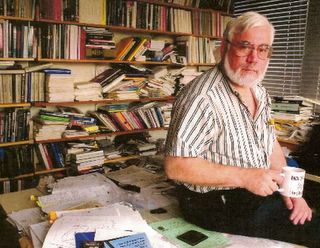
Adjuncts' Woe
By David Abel | Globe Staff | 1/01/2001With tens of thousands of dollars of debt, Larry Kaye is on the verge of declaring bankruptcy.
Counting pennies and worrying whether she'll have work in a few months is just a part of life for Barbara Gottfried.
And, even if occasionally he hits up his family for extra cash, Victor Manfredi says he now prefers an ascetic lifestyle - riding a bike because he can't afford a car, living in a group house, and forgoing the expense of children.
The three highly educated 40-somethings are downtrodden veterans of a thriving lower tier of academia. Despite surging endowments and ever-rising tuition, colleges throughout the country are increasingly relying on "adjunct" professors, a low-paid subset of academics who rarely receive health or retirement benefits, have little or no say over the direction of their colleges, and usually have no job security.
Now, for the first time in any city, the 10,000 or so adjunct professors in Boston - among the nation's largest population of part-timers - are organizing a united front to fight what they view as exploitation and the lowering of standards in higher education. By banding together, they hope to pressure the city's colleges and universities to improve their working conditions.
"A teacher's working conditions are a student's learning conditions," said Gottfried, 48, a women's studies professor who struggles to get by on what she earns from teaching several classes a year at Boston University and Merrimack College. "We basically have no rights and we feel the integrity of higher education is under threat from the extensive use of adjunct faculty."
Today, nearly half of all professors in the United States are considered adjuncts, up from a fifth in 1970 - and their ranks are growing. More than two-thirds of all professors hired between 1995 and 1997 were non-tenure track adjuncts, according to the US Department of Education.
To survive, the part-timers often teach as many classes as possible, often at multiple schools, sometimes sacrificing quality for quantity. They complain their workload is often twice that of fulltime faculty for less than half the pay. With so much time spent in class or in office hours, they have little time to grade papers, consider assignments, or advance their career by writing books or journal entries.
Many of these academics are part-time in name only.
In a recent survey of adjunct professors in Boston by the American Association of University Professors, 65 percent said they consider teaching their major source of income, even though the majority teach only one or two classes a semester at an average of $2,200 a course.
For years, those daunting numbers have haunted Steve Almond. The 34-year-old adjunct professor of composition at Emerson and Boston colleges says he found himself repeatedly scrawling figures into a grading book during class.
If he had 18 students, he would multiply that by their tuition (about $30,000) and get $540,000. Then he would divide that number by eight (the number of classes a student takes a year) and arrive at $67,500, the amount they were paying for his class. Then he would divide by $2,500, the amount the college paid him for the course, and the result would be what he dubs the "Adjunct Exploitation Factor."
"It's a Catch-22; I love teaching and the departments I taught for," said Almond, who now spends most of his time writing fiction and journalism, and editing. "But it was impossible to support myself and do creative work as an adjunct. It's really untenable to do it for a living."
Unwilling to give up their career after devoting so many years to it, Gottfried and Kaye set out to build on a 1998 victory for adjuncts at the University of Massachusetts at Boston. After more than a year picketing the school with support from the university's faculty union, the regular part-timers won from UMass a pay raise and the right to buy into the university's health plan.
Soon after, Kaye, a 40-year-old adjunct philosophy professor at UMass-Boston joined up with Gottfried and others to establish a local chapter of the Coalition of Contingent Academic Labor, a national group that works to improve the lot of adjuncts, graduate assistants, and other poorly paid academics.
Their short-term goal is to establish the nation's first citywide network of adjunct professors. By organizing the part-timers, they hope to build an alliance with sufficient leverage to negotiate everything from higher wages to health benefits to rules ensuring academic freedom at the city's 58 institutions of higher education.
With support from national groups, the emerging union began picketing in September at Emerson College, where two-thirds of the faculty work part time. Gottfried said the group has already recruited more than half of Emerson's adjuncts and is planning to spread their efforts soon.
"There are just a huge number of professors exploited in this city," said Kaye, who teaches seven classes a year at UMass and ekes out a living on an annual salary of about $25,000. "I call it exploitation, because they're taking unfair advantage. They pretend we're short-time, temporary workers. But we're just as much a fixture as most tenured professors."
The adjuncts, however, have no illusions. Organizing in Boston, they know, is particularly difficult because nearly all the institutions are private and, therefore, lack faculty unions. A 1980 Supreme Court ruling forbids full-time faculty at private colleges from establishing unions. Without anything on the ground, they must build from scratch.
And by their nature, adjuncts are a hard group to organize. "Many work in isolation and suffer from the absence of community support," wrote Richard Moser, a member of American Association of University Professors, in a journal article on the Boston effort. "In addition, their lack of tenure and due process rights leaves them feeling vulnerable to retribution."
Manfredi, 44, who received a doctorate in linguistics and social anthropology from Harvard, has lived on the edge of poverty for years, scraping by on pittances from schools including Northeastern, MIT, and Harvard.
But as hard as it is, Manfredi still has his pride. He insists he prefers his life to that of a tenure-track professor, a job he tried for many years to land.
"There was a clear moment which came relatively early in my graduate training, when I was aware of being sorted by my supervisors into the ‘politically unreliable' basket, and thus red-lined away from tenure-track shortlists and cushy fellowships," he said. "At the same time, some of my peers were being `zoned in' to the elite, but in many cases the cost to their intellectual integrity was more than I was ready to accept."
David Abel can be reached at dabel@globe.com. Follow him on Twitter @davabel.
Copyright, The Boston Globe
A New Union Battle
By David Abel | Globe Staff | 4/13/2001
AMHERST - Their doors have been smeared with shaving cream and ketchup, urinated on and glued shut, and one had his set on fire. Other insults include slanderous notes scrawled on their message boards and throughout their halls. And then there's the bullying, death threats, and violence: A drunk student threw one headfirst into a cement floor.
It's not easy to be a resident assistant at the University of Massachusetts.
This week, the university's RAs declared they had enough. In a move to win better pay, job security, and other benefits - such as a clear contract - students who represent the school's 364 dormitory RAs told university officials they intend to become the nation's first undergraduate RA union.
"A lot of us have just become disgusted with our working conditions," said Chris Fierro, a 21-year-old junior and one of the RAs who in the past week helped file a union election petition with the Massachusetts Labor Relations Commission, which will probably rule in May. "We are sick of questionable firings, a vague contract, and working for less than minimum wage."
The move opens a new front in the national battle over whether university students have the right to unionize. So far most of the legal fights have been waged by graduate teaching assistants, who argue that they are employees of the university, not just grad students.
At UMass, where graduate teaching assistants unionized 11 years ago, chancellor David K. Scott said the university would not tolerate an RA union.
"Undergraduates at the university are clearly students," Scott said in a prepared statement. "The administration does not support the effort to unionize, and will follow established procedures expressing our position on the petition for recognition."
About two-thirds of the campus's RAs have already signed cards saying they want to join the union, which is backed by the United Auto Workers and would be affiliated with the graduate students union. Part of what's fueling their campaign, they say, is that many RAs believe the university has misled them on everything from their compensation to their rights.
Instead of earning $137 for 20 hours of work a week, as the university asserts, they say they're really earning only $50, or $2.50 an hour, after residence officials subtract the cost of their rooms, which the RAs say are supposed to be free. The RAs also say, despite university denials, that they are at risk of being fired and thrown out of their rooms without due process.
Their union movement has been fueled mainly by a 30-page manifesto published last spring by a senior who spent three years as an RA at UMass. Citing a 50 percent turnover rate among RAs, Gregory Essopos issued a call to arms to his fellow dorm monitors: "If workers are happy with their jobs, there is no need to unionize," he wrote. "It is clear, however, that in this situation workers are not happy, and it's time to do something about that."
Not long after the dense paper was published, the university fired two RAs, a move students in the budding movement called "questionable" and "arbitrary."
"It started to occur to a lot of us that we had less rights than our residents," said Mark Griffin, 22, a senior who has been an RA for two years. "It was wrong and it was time to act."
When Fierro and about 40 other RAs marched to the provost's office last week to demand recognition, they weren't welcomed. On Monday, UMass associate provost Susan Pearson met with nine of the disgruntled RAs, they said, and declined to act on any of their grievances. The students left and, according to the RAs, said, "We'll see you at the MLRC."
Before the RAs can take a formal vote to unionize, the Labor Relations Commission must rule on whether the students are legally eligible to form a collective bargaining unit.
University residence officials say they go out of their way to make sure the job is completely clear to RAs before they start. And they add that students are thoroughly screened, trained, and supported by the administration throughout their term.
As for compensation, UMass officials say it is misleading to suggest RAs earn only $50 a week. Unlike other undergraduates, RAs live in a double room alone and are provided with a free high-speed Internet connection. The price for other students to live in such accommodations would be about $3,200.
It is also wrong for RAs to suggest they are subject to an arbitrary disciplinary process, they say. In the past two years, the university fired only 13 RAs out of more than 700 on the job during that time. All of those, they add, had the right to appeal those decisions.
"They're definitely putting a twist on the issues," said Michael Gilbert, director of the university's housing services, who said that, despite the difficulties, twice as many students this year applied to be an RA than there are slots open. "We don't believe we're hiding things. We tell them clearly at the beginning what our expectations are. But I guess sometimes their expectations aren't met."
Not everyone feels exploited. Some RAs scorn their fellow students' efforts. Union foes also warn that all students will end up paying the price for a union, subsidizing higher wages and benefits for a small group on a campus with 18,000 students.
"It would be funny if it wasn't so pathetic," wrote Rob Schulze, 20, a junior RA, in an editorial headlined "Kill the Union" in the campus's student newspaper. "The reasons for an RA union are either flat-out wrong, simply hilarious, or beyond the scope of organized labor."
An hour or so before midnight this week, in a dingy dorm office plastered with posters of Che Guevara and Noam Chomksy, about a dozen RAs mulled their movement and did their best to answer why they would want to spend so much time in a thankless job that often requires undergraduates to write up neighboring students for drinking or blasting music.
For some it was about being part of a support network that helps students overcome personal academic problems. For others, it was about the extra cash and a large subsidized room. And for some it was about the camaraderie they share with other RAs.
For Tanya Herron, who was once shoved onto the floor by a drunk man in her hall, it's about the ultimate reward. "I guess it's like being a parent," she said. "The thank yous aren't always clear. But you know people appreciate what you're trying to do."
David Abel can be reached at dabel@globe.com. Follow him on Twitter @davabel.
Copyright, The Boston Globe
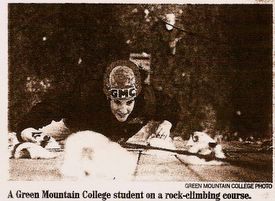
AMHERST - Their doors have been smeared with shaving cream and ketchup, urinated on and glued shut, and one had his set on fire. Other insults include slanderous notes scrawled on their message boards and throughout their halls. And then there's the bullying, death threats, and violence: A drunk student threw one headfirst into a cement floor.
It's not easy to be a resident assistant at the University of Massachusetts.
This week, the university's RAs declared they had enough. In a move to win better pay, job security, and other benefits - such as a clear contract - students who represent the school's 364 dormitory RAs told university officials they intend to become the nation's first undergraduate RA union.
"A lot of us have just become disgusted with our working conditions," said Chris Fierro, a 21-year-old junior and one of the RAs who in the past week helped file a union election petition with the Massachusetts Labor Relations Commission, which will probably rule in May. "We are sick of questionable firings, a vague contract, and working for less than minimum wage."
The move opens a new front in the national battle over whether university students have the right to unionize. So far most of the legal fights have been waged by graduate teaching assistants, who argue that they are employees of the university, not just grad students.
At UMass, where graduate teaching assistants unionized 11 years ago, chancellor David K. Scott said the university would not tolerate an RA union.
"Undergraduates at the university are clearly students," Scott said in a prepared statement. "The administration does not support the effort to unionize, and will follow established procedures expressing our position on the petition for recognition."
About two-thirds of the campus's RAs have already signed cards saying they want to join the union, which is backed by the United Auto Workers and would be affiliated with the graduate students union. Part of what's fueling their campaign, they say, is that many RAs believe the university has misled them on everything from their compensation to their rights.
Instead of earning $137 for 20 hours of work a week, as the university asserts, they say they're really earning only $50, or $2.50 an hour, after residence officials subtract the cost of their rooms, which the RAs say are supposed to be free. The RAs also say, despite university denials, that they are at risk of being fired and thrown out of their rooms without due process.
Their union movement has been fueled mainly by a 30-page manifesto published last spring by a senior who spent three years as an RA at UMass. Citing a 50 percent turnover rate among RAs, Gregory Essopos issued a call to arms to his fellow dorm monitors: "If workers are happy with their jobs, there is no need to unionize," he wrote. "It is clear, however, that in this situation workers are not happy, and it's time to do something about that."
Not long after the dense paper was published, the university fired two RAs, a move students in the budding movement called "questionable" and "arbitrary."
"It started to occur to a lot of us that we had less rights than our residents," said Mark Griffin, 22, a senior who has been an RA for two years. "It was wrong and it was time to act."
When Fierro and about 40 other RAs marched to the provost's office last week to demand recognition, they weren't welcomed. On Monday, UMass associate provost Susan Pearson met with nine of the disgruntled RAs, they said, and declined to act on any of their grievances. The students left and, according to the RAs, said, "We'll see you at the MLRC."
Before the RAs can take a formal vote to unionize, the Labor Relations Commission must rule on whether the students are legally eligible to form a collective bargaining unit.
University residence officials say they go out of their way to make sure the job is completely clear to RAs before they start. And they add that students are thoroughly screened, trained, and supported by the administration throughout their term.
As for compensation, UMass officials say it is misleading to suggest RAs earn only $50 a week. Unlike other undergraduates, RAs live in a double room alone and are provided with a free high-speed Internet connection. The price for other students to live in such accommodations would be about $3,200.
It is also wrong for RAs to suggest they are subject to an arbitrary disciplinary process, they say. In the past two years, the university fired only 13 RAs out of more than 700 on the job during that time. All of those, they add, had the right to appeal those decisions.
"They're definitely putting a twist on the issues," said Michael Gilbert, director of the university's housing services, who said that, despite the difficulties, twice as many students this year applied to be an RA than there are slots open. "We don't believe we're hiding things. We tell them clearly at the beginning what our expectations are. But I guess sometimes their expectations aren't met."
Not everyone feels exploited. Some RAs scorn their fellow students' efforts. Union foes also warn that all students will end up paying the price for a union, subsidizing higher wages and benefits for a small group on a campus with 18,000 students.
"It would be funny if it wasn't so pathetic," wrote Rob Schulze, 20, a junior RA, in an editorial headlined "Kill the Union" in the campus's student newspaper. "The reasons for an RA union are either flat-out wrong, simply hilarious, or beyond the scope of organized labor."
An hour or so before midnight this week, in a dingy dorm office plastered with posters of Che Guevara and Noam Chomksy, about a dozen RAs mulled their movement and did their best to answer why they would want to spend so much time in a thankless job that often requires undergraduates to write up neighboring students for drinking or blasting music.
For some it was about being part of a support network that helps students overcome personal academic problems. For others, it was about the extra cash and a large subsidized room. And for some it was about the camaraderie they share with other RAs.
For Tanya Herron, who was once shoved onto the floor by a drunk man in her hall, it's about the ultimate reward. "I guess it's like being a parent," she said. "The thank yous aren't always clear. But you know people appreciate what you're trying to do."
David Abel can be reached at dabel@globe.com. Follow him on Twitter @davabel.
Copyright, The Boston Globe
Lessons of Leisure

By David Abel | Globe Staff | 8/04/2000
Neither the oxymoron in the name of her major nor its lack of academic gravitas ever really bothered Jill Henneke.
While other students needled her for majoring in "leisure studies" - watching her
go ice climbing or sailing while they pored over hefty textbooks in more sterile settings - the 26-year-old recent graduate was happy to earn a degree by learning the intricacies of recreational activity.
"A lot of people stereotype adventure recreation," said Henneke, referring to her specialty at Green Mountain College in Poultney, Vt. "But it's not just sitting around a campfire and telling ghost stories."
In spite of its rocks-for-jocks reputation, leisure studies have carved out a significant and growing niche in academia. Leisure studies professors train their students in everything from the finer points of wilderness living to marketing sports programs as "therapeutic recreation. "
Today, more than 350 US colleges offer leisure studies programs, according to the National Recreation and Parks Association, a college accrediting group. And, with the boom in outdoor recreation from skiing to whitewater rafting, many students are landing lucrative careers in recreation management.
But wherever students and professors go, no matter how serious the discipline, the joshing jostles them.
"Granted, there's an image problem with the name," said Cary McDonald, acting chairman of the leisure studies department at the University of Illinois at Urbana-Champaign, one of the country's first programs. "It's amazing how many times our faculty has sat around talking about our name. Yeah, we're not physics or science, and we're kind of at the bottom end of the social science environment. But we shouldn't have to fight a battle for credibility."
What gives such programs a bad reputation, academics in the field say, are those schools that focus more on the practice of recreation than the study or business of recreation.
One potentially prickly example is Green Mountain College's recently announced partnership with the Killington ski resort. While students in the leisure studies department will learn about the administrative side of running a multi million-dollar mountain, school officials say, they'll also spend a good chunk of their time on the slopes.
"It's really ironic because the public recognizes the value of leisure," said Bob Riley, chairman of the recreation and leisure studies department at Green Mountain. "Yet when push comes to shove, we have to put up with comments about 'all you do is play all day.' "
The credibility problem forced a shakeout in the field about 10 years ago, as high-profile programs at schools such as the University of Maryland and the University of Oregon closed their leisure studies departments. But today, with the economy soaring, more people taking vacations, and tourism expanding throughout the country, the numbers of leisure studies programs and students entering the field are rebounding.
There aren't any recent surveys that document the upsurge,
according to officials at the National Recreation and Parks Association. But leading professors in the field say the growth is especially evident in the demand for professors. Unlike most academic departments, where jobs are scarce, leisure studies departments across the country are trying to cater to more undergraduates and fill open positions."We're really hurting for PhDs in our field," McDonald said. "We need more faculty. There were a hundred faculty jobs open nationwide (this year), and there's no way to fill them right now."
Leisure studies is the outgrowth of college parks and recreation departments, which began cropping up in academia after World War II when the combination of prosperity and baby-boom families increased the demand for organized recreation.
In the 1960s, with the rise of sociology and new fields in social sciences ranging from ethnic studies to gender studies, many of the parks and recreation departments began changing their name to leisure studies.
The discipline then shifted from its initial mission of training future park rangers or planners for city parks and recreation departments to delving into the sociological underpinnings of leisure, professors say. Today, there's even something called the Academy of Leisure Studies, which has a Web site featuring "white papers" on subjects including "The Problem of Free Time: It's Not What You Think," "Leisure's Relationship to Health," and "Leisure Apartheid."
Jokes over the arguably light subject matter started shortly after many of the college departments adopted the new academic title, professors say. And the jeering hasn't let up.
While professors in the field admit that leisure studies, like the legendary under water basket weaving or the more realistic physics for poets, have long attracted athletes or others interested in easy classes, they say spotty academic curricula have given way over the years to more rigorous standards.
"Too many of those curricula were created too quickly, were subpar intellectually, and were built around recreation," said Geoffrey Godbey, a leisure studies professor at Pennsylvania State University and author of "Time for Life: The Surprising Ways Americans Use Their Time." "But a lot of those programs have disappeared, and unlike years ago, I don't find people twitching to ask me if I have a ping-pong table in my office."
Though snide comments are still part of life for an academic in leisure studies, it's now more likely professors find people interested in their work, Godby and others say.
One source of such interest increasingly comes from officials in China and South Korea, where prosperity affords people more free time and more cash to spend. Godby and others say they often receive calls about translating their work.
Although there may be new opportunities and widening acceptance of the field, leisure studies professors' earnings haven't kept up with those in other academic disciplines. According to a 1999 survey by the College and University Personnel Association, leisure studies is one of the lowest-paying disciplines, not paying much more than the average $33,912 earned by those teaching secretarial services in 1998.
But as tourism continues to grow and people have more free time - a 1997 study by Godby and a leisure studies colleague at the University of Maryland found Americans have an average of 40 hours of free time each week, five more hours than in 1965 - money and jobs are expected to burgeon.
If Jill Henneke's experience is any measure, the future looks bright for leisure studies majors.
It didn't take her long after graduating from Green Mountain College this spring to land a fulfilling job. Little more than a month after graduation, she moved to West Virginia to oversee a program that takes troubled kids into the wilderness to teach them about more than starting fires and setting up camp.
"It's a chance to do some good for the kids, to teach them lessons about life," she said. "It's exactly what I wanted out of a job. And I don't know if I could have done it without studying what I did."
David Abel can be reached at dabel@globe.com. Follow him on Twitter @davabel.
Copyright, The Boston Globe
Subscribe to:
Posts (Atom)
